
Knowledge · Aesthetic treatments
An informed decision begins with clear information. This page explains three different treatment approaches, their development and the changes they may produce.
This information provides general guidance. Whether a method is suitable, what results are realistic and what risks are involved must be assessed individually.

Hyaluronic acid fillers
Understanding volume and contours

How do they work?
Hyaluronic acid occurs in skin and cartilage, among other tissues, and can bind water. In a filler it is used as a gel. This can add volume to tissue and change certain wrinkles or contours. Many gels are chemically cross-linked so that they break down more slowly. This section refers to hyaluronic acid fillers; other filling materials have different properties. [S1]
What aesthetic change is possible?
Depending on the appropriate product and treatment area, lips or cheeks may gain volume, for example, and some wrinkles may appear less noticeable. The existing anatomy, material selected and extent of the change are important. A particular appearance cannot be guaranteed. [S2]
A subtle restoration of volume may be one possible goal. Personal ideas about beauty should be discussed specifically: which contour should change, and which features should remain?
A look at the history
In 1981, a collagen filler was approved by the FDA in the United States. The first approved hyaluronic acid filler followed there in 2003. Both milestones refer to the history of US approvals. [S3]
Duration and limitations
Hyaluronic acid fillers break down over time. How long a visible change lasts depends on factors including the preparation and treated area. A single duration therefore does not apply to every product and person. [S1] [S2]
What should be considered?
Swelling, bruising, pain, infections or lumps may occur. Rarely, filling material can block a blood vessel and cause serious, sometimes permanent harm, including tissue damage, loss of vision or stroke. Even a biodegradable gel does not mean that every complication can be reversed. [S2]
Botulinum toxin
Expression lines and muscle activity
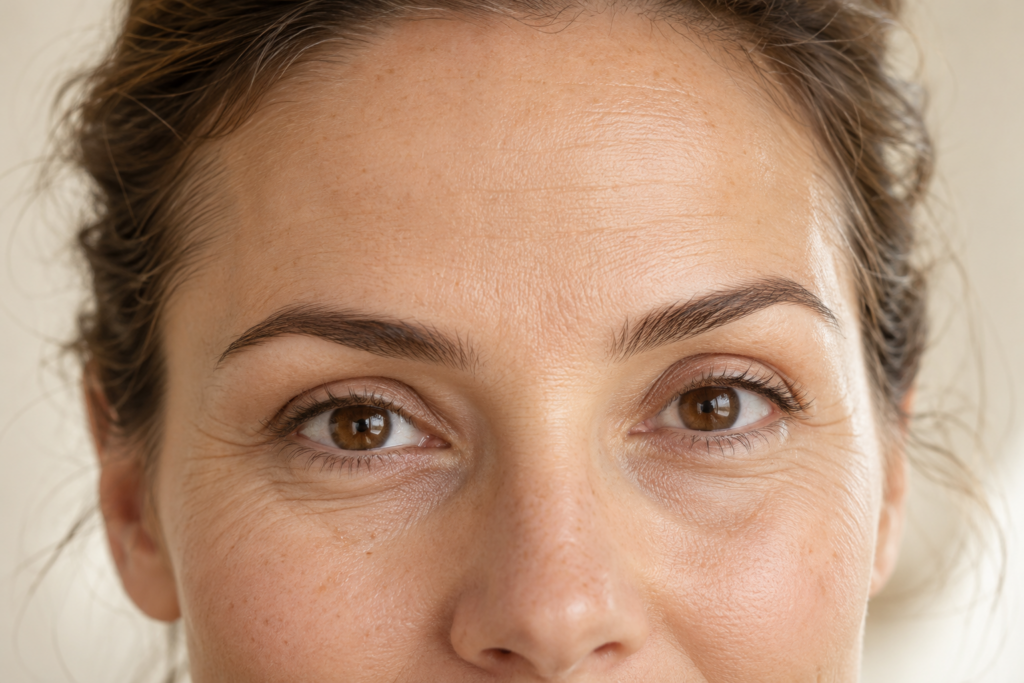
How does it work?
Botulinum toxin type A reduces the release of the messenger acetylcholine at the junction between nerve and muscle. The treated muscle consequently becomes temporarily less active. Lines caused or intensified by repeated muscle movements may appear less pronounced. [S6]
What aesthetic change is possible?
One treatment goal may be to soften certain expression lines while preserving individual facial expression as far as possible. Which muscles are affected and how much facial movement changes depends on the treatment and individual starting point. Natural-looking results are a goal, not a guarantee. [S8]
From ophthalmology to aesthetics
Medical development included work in ophthalmology. In the late 1970s, Alan Scott studied the substance for treating strabismus. A first therapeutic approval in the United States followed in 1989. [S4]
On 12 April 2002, the FDA approved a preparation there for temporarily improving certain moderate to severe lines between the eyebrows. These dates describe development in the United States. [S5]
When does the effect appear, and how long does it last?
Visible changes often appear after three to seven days. In many aesthetic applications, the effect lasts approximately three to four months, sometimes longer. Onset and duration vary; these figures are guidance only. [S7]
What should be considered?
Possible side effects include bruising, redness, pain, headaches or temporary weakness of neighbouring muscles, for example with a drooping eyelid. Serious side effects are also possible. Difficulty swallowing, speaking or breathing after treatment requires immediate medical help. Pre-existing conditions, medicines, pregnancy and breastfeeding should be discussed with the physician. [S6] [S8]
Laser hair removal
How light can reduce hair growth

How does it work?
Pigment in the hair absorbs light energy. The resulting heat can damage structures of the hair follicle that are important for regrowth. The method selected must therefore suit the hair colour and skin type. [S12] [S10]
What aesthetic change is possible?
After a successful course of treatment, fewer hairs often grow back. Remaining hairs may be finer and less noticeable. The extent and duration of the change vary individually; complete lifelong freedom from hair cannot be promised for every person and body area. [S11]
Light as a scientific approach
In 1983, Anderson and Parrish described the principle of selective photothermolysis: light should act selectively on a particular structure. In 1996, Grossman and colleagues published an early study of hair reduction using a ruby laser in 13 volunteers. These studies mark important steps from a physical principle to its application to hair follicles. [S9] [S10]
Why are several appointments needed?
Hairs are at different stages of growth. Body area, hair colour, hair thickness and skin type influence the treatment plan. Several sessions are usually necessary; hair may later grow back and maintenance treatment may be needed. [S11] [S13]
Very light, red, grey or white hair often responds poorly or not at all. Darker skin can also be treated, but requires a suitable method and experience with the particular skin tone. [S12]
What should be considered?
Redness, swelling and discomfort may occur temporarily. Other risks include burns, blisters, scarring and changes in skin colour. Eye protection and suitable sun protection are part of treatment safety. Skin condition, tanning and medicines must be discussed beforehand. [S11] [S12] [S13]
Three approaches compared
| Method | Approach | Possible visible change | Time limitations |
|---|---|---|---|
| Hyaluronic acid fillers | Gel adds volume to tissue. | Changed contours or less pronounced wrinkles. | Breakdown and duration depend on the product and area. [S1] [S2] |
| Botulinum toxin | Certain muscles become temporarily less active. | Expression lines may appear less noticeable. | The effect wears off; often around three to four months. [S6] [S7] |
| Laser hair removal | Light energy acts on the pigmented hair follicle. | Fewer and sometimes finer hairs over the longer term. | Regrowth and maintenance treatments remain possible. [S11] [S12] |
Frequently asked questions
Are fillers and botulinum toxin the same?
No. Hyaluronic acid fillers add volume. Botulinum toxin, by contrast, temporarily affects the activity of certain muscles. The methods have different effects and risks. [S1] [S6]
Is a natural result guaranteed?
A natural-looking result may be a shared goal. How a change looks and is perceived depends on the starting point, planning and individual response. [S2] [S8]
What should be clarified before treatment?
The specific wishes, realistic expectations, relevant pre-existing conditions, medicines and previous treatments are important. The qualifications of the treating person, possible side effects and a suitable aftercare plan should also be discussed. [S2] [S6] [S13]
Sources
- [S1] FDA — FDA-Approved Dermal Fillers — Hyaluronic acid, water binding, gel effects, breakdown and different materials.
- [S2] FDA — Dermal Fillers (Soft Tissue Fillers) — Possible aesthetic changes, variable duration and risks including vascular occlusion.
- [S3] FDA — Dermal Fillers, Executive Summary (2021) — US approvals of collagen fillers in 1981 and the first hyaluronic acid filler in 2003; printed page 10.
- [S4] FDA — Clinical Review, Botulinum Toxin Type A (2000) — Development from ophthalmology and first therapeutic US approval in 1989; historical source.
- [S5] FDA — Original approval letter, 12 April 2002 — US approval for temporary improvement of certain glabellar lines on 12 April 2002.
- [S6] DailyMed — FDA-approved prescribing information, onabotulinumtoxinA — Inhibition of acetylcholine release and important risks; product-specific US prescribing information.
- [S7] American Academy of Dermatology — Botulinum toxin therapy: Overview — Often 3–7 days until visible changes and approximately 3–4 months of effect; guidance values.
- [S8] American Academy of Dermatology — Botulinum toxin therapy: FAQs — Targeted muscle relaxation, natural facial expression as a treatment goal and possible side effects.
- [S9] Anderson & Parrish — Selective photothermolysis, Science (1983) — Original study on selective photothermolysis; scientific milestone, not a device approval.
- [S10] Grossman et al. — Damage to hair follicles by normal-mode ruby laser pulses (1996) — Early clinical study of hair reduction using a ruby laser, 13 volunteers and varying results.
- [S11] American Academy of Dermatology — Laser hair removal: FAQs — Multiple sessions, possible regrowth, variable results, eye protection and side effects.
- [S12] American Academy of Dermatology — 6 ways to remove unwanted hair — Absorption of light by hair pigment, limitations with light hair and importance of skin type.
- [S13] American Academy of Dermatology — Laser hair removal: Preparation — Hair growth cycle, medicines, tanning and individual consultation.